
2026 Legislative Session Recap

Critical Needs Addressed - Advocacy Continues!
Legislators stuck with the budget deal struck by Walz, legislative leaders four days before the end of session. This included an HCMC Rescue Plan needed to help a critical safety net hospital, a $1.2 billion bonding Bill with $400 million+ for water infrastructure, and establishing an Office of Inspector General aimed at preventing fraud. The legislature also appropriated funds for critical IT Upgrades for counties and tribes needed to administer SNAP, Medicaid. The tax bill included property tax relief and lower car tab fees while funding passed for wildlife habitat, wetland restoration and watershed protection projects and more environmental projects in the ENRTF bill. Please see MPR News, MinnPost, Minnesota Reformer & MN Star Tribune for more coverage.
In its takeaways from the 2026 Minnesota legislative session the Minnesota Reformer included headlines like “it could have been worse”, “politics still got in the way”, and “lack of transparency.” Overall, the session went as expected with few surprises and critical needs addressed. Lawmakers said their farewells with possible record turnover from retirements, and all 201 legislative seats are on the ballot in November. This could lead to shake-ups in 2027 when lawmakers must pass a budget and debate policy.
LWVMN saw progress on our priorities during the 2026 session and worked with partners to stop bad policies from becoming law, like the “Minnesota SAVE Act”. While there was no House vote on critical measures that would have balanced gun rights with the safety of our communities, the MN Senate passed a gun control package that included an assault weapons ban, ghost guns ban, and funding for Extreme Risk Protection Order education advocated for by LWVMN. Additionally, we were pleased to see the appropriation of $1 million for the adoption of statewide nonfatal shooting investigation strategies embraced by Minneapolis and St Paul.
While guardrails for Sustainable Aviation Fuel (see observer report below) and gas regulation were passed, including a ban on fracking, Minnesota lawmakers failed to pass any meaningful energy or environmental policy. This included bipartisan bills like requiring producers to pay for a battery recycling program and limiting the use of Non-Disclosure Agreements (NDA) around data centers. LWVMN will continue to advocate for a responsible and democratic government with our strong positions.
Want to stay updated throughout the year? Sign-up for daily newsletters from MinnPost, Minnesota Reformer, MPR News to keep informed on the issues. LWVMN Observer and Lobby Corps members follow committee meetings and help inform our advocacy at the Capitol, please see recent reports below and consider joining us next year!
Observer Reports
-
LWVMN Submitted Testimony in Support
LWVMN Observer & Lobby Corps Member Terry Campbell
The Committee heard a presentation of the Governor's Public Safety Supplemental Budget Request. Presenters included Public Safety Commissioner, Bob Jacobsen; Homeland Security and Emergency Management Director, Allison Farole; and Bureau of Criminal Apprehension Superintendent, Drew Evans.
Among other items, the proposal requested funds for various gun violence prevention efforts, enhanced funding for the Minnesota School Safety Center, a new School Safety Grant program, and funding for the Behavior Threat Assessment and Management Team (BTAM).
The proposed Gun Violence Prevention Package budget would allocate $950,000 in FY 2027, and $292,000 in FY 2028-29 for:
Public Awareness campaign for Extreme Risk Protection Orders (ERPOs)
Military-style assault weapons and high-capacity magazine ban
Re-passing a binary trigger ban
Ban ghost guns
Safe and secure storage of firearms
Report lost or stolen firearms
Create a legal cause of action against gun manufacturers
Repeal local preemption of firearms restrictions
Five million in FY 2027, and $10 million in FY 2028-29 would be allocated for:
Additional staff at the Minnesota School Safety Center (MnSCC).
A new school safety grant program that provides competitive grants for school safety and security upgrades.
Physical infrastructure, training for school staff and first responders, enhanced visitor screening.
Safety equipment and technology
The proposal would also enhance funding for the Behavior Threat Assessment and Management Team (BTAM) that "takes a proactive holistic approach to identify and investigate persons of concerns that threaten safety and security." Funding would staff special agents, criminal intelligence analysts, mental health and social workers.
Several representatives praised the Governor's gun violence prevention initiatives, but Representative Durran expressed irritation with some of the provisions, noting that banning assault weapons would "put cops at jeopardy." Co-Chair Moller responded, saying she is irritated with children being shot in schools and churches.
The presentation was informational only. No action was taken.
-
LWVMN Observer and Lobby Corps Member Marti Micks
SF 4898 (Westlin): Legislative email, telephone number and office space usage restriction provision to prevent misuse of legislator’s phones, emails and offices. Sen Westlin submitted Amendment A1 (minor changes to draft) which passed. Common Cause and LWVMN Submitted Testimony in Support of this bipartisan bill. Currently, various people or groups use legislative emails, phone numbers and office space. Sen Drazkowski said Executive Branch should have similar detailed restrictions and that public unions currently have access to all emails in addition to the Attorney General’s office. There are also concerns of persons misrepresenting themselves as legislative employees. The Executive Branch already has restrictions in statute, but Westlin will look to see if that statute 43A.38 has similar detail. Enforcement of this bill would be internal. The bipartisan bill as amended was referred to Rules and recommended to pass.
SF 2321 (Johnson Stewart): This bill adds an item to the list of information that a political subdivision must include in its submission to Minnesota Management and Budget when requesting General Obligation Bonds to be included in the governor’s capital budget. The new item would have a box to check off whether the political subdivision has a plan for maintenance and preservation of the project and addressing specified items. This is similar to the requirement that Minnesota has for County’s pavement management of roads to maintain their assets. Sen Bahr asked if this would apply to projects funded by local sales tax. Currently, this only would apply to bonding. But Johnson Stewart said she would look to apply it to local sales tax asset management next year. This bipartisan bill was referred to Judiciary committee.
SF 4932 (Xiong). A2 amendment: MMB 3844. A variety of items on this bill. It was noted that bills should only have one topic, but Sen. Xiong said it was due to time constraints for deadlines and the need for these items to be address.
Paul Moore, Asst. Commissioner of Accounting Services, Minnesota Management and Budget testified:
There is now a shortage of pennies and state agencies are having problems in getting pennies for giving change. This bill would only apply to cash transactions which would round up or down using symmetrical rounding. State agencies cannot round off pennies unless authorized by state statute. The Dept of Public Safety, Driver and Vehicle Services, DNR (Hunting/Fishing licenses and gift shops still have cash transactions), Dept of Revenue and MMB maintains state’s treasury window. Sen.Koran suggested that municipalities be included in this bill to give them this rounding authority. Sen Bahr would like to know the percentage of cash transitions vs credit or debit cards. Senator Mathews offered A1 amendment: small fix to always round down to favor the taxpayer. A1 was not adopted
Galen Benshoof: Enterprise Director, Employee Insurance:
Health Insurance high-deductible plans are currently offered to non-represented (not covered by union) employees benefit plan and managerial plan under chapter 43A. Proposed bill would allow state to NOT offer the high-deductible plan. If not offered, employees would go with the Advantage plan that other union employees have. There are 264 non-union represented employees. Only 89 employees enroll. Could save thousands but amount not known. After pushback by some senators, it was clarified that this bill doesn’t disallow state offering this plan.
Motion recommended for General Order and SF4932 passed (on partisan lines).
SF 4059: as proposed to be amended by the A-3 delete everything amendment, is the State Government Finance omnibus bill for 2026. SF 4059 enacts supplemental appropriations, modifies enacted appropriations, and includes the agency bills for the Board of Barbers (from SF 4001, Hemmingsen-Jaeger) and the Board of Cosmetologists (from SF 4217, Hemmingsen-Jaeger), as amended in the State and Local Government Committee.
A3 amendment was adopted. Appropriations for Security; ($1.925 million) to Public TV stations in Greater Minnesota (Pioneer PBS, Lakeland PBS, KSMP, PBS North, Prairie Public TV); $800,000 for Melissa Hortman memorial statue to go in Memorial Garden by State Office Bldg, $1,231,000 for Medicaid Fraud Control Unit. Appropriations carrying this only
A5 amendment was adopted: appropriation for Information Technology cost and admin of payroll reporting portal and data base.
A6 amends A5 to align with existing data privacy practices (except person’s name) passed.
A7 Sen. Koran. Data on employees of contractors is all private. Wages (not names) would be viewable. Unions agree with it so they could check on whether they were paid correctly. Makes it nonpublic data for individual. A7 did not pass.
Roll call SF4059: 6 ayes-5 no. Bill is referred to Finance Committee.
SF 5088: Supplemental Budget Recommendations Presented by Paul Moore, Asst. Commissioner of Accounting, MMB (Article 1, section 5). Fraud Response package, increase internal controls by adding 15 full-time employees, so MMB can take a more active role. One proposal included in this bill provides $1.726 million in FY 2026 and $2.301 million each year thereafter for an additional 15 FTE for statewide internal control specialists and internal auditors within MMB.
SF 3900 (Rest) refers to audit recommendation (was heard April 14, 8:30 am, in Tax committee).
Martha Burton, Asst. Commissioner, Dept of Revenue to expand department.
Grant recipients named in statutes. Dept of Admin, Office of Legis Auditor recommended: best practices making grants go through competitive process. Sen. Lang was concerned that Hometown Heroes might be affected by this.
Sen. Drazkowski was okay with the $2.301 million to go after fraud, but was upset that DHS Behavioral Response administration when auditor asked for data, manufactured documents out of thin air and gave to auditor. He was upset those employees were not fired. He wanted to delete Section 4 and wanted a vote. Chair Xiong reminded committee this was only informational so not vote taken.
Information on SF 4183 (local news bill) since the testifiers were not able to give testimony at previous meeting due to time constraints:
Susan Kent, Woodbury News Net (she was a MN legislator representing Woodbury);
Anais Frober-Martinez, student from Perpich High School for the Arts, 360 ThreeSixty Journalism;
Charlie Weaver, Metro Nonprofit News Network (he works for U of MN Daily). Since 2018, 97 news outlets closed in Minnesota. More than one-half of communities no longer have a local news paper. Revenue models are not sustainable.
Grants for intern would cover all facets of news: print, digital, TV and all venues.
Media literacy: Civic Seal would be run by YMCA’s
Local News Talent: Educating MN youth. Analysis and using for Bridge building.
Sen Cwodzinski said he felt effects of when Eden Prairie lost its local newspaper. He said his constituents weren’t getting much info anymore and that you get a thriving democracy with local news. No votes on these – just informational.
(SF4183 did not pass during the 2026 Legislative Session)
SF 4415: (Clark) Council of Central and Eastern European Affairs. Testifier: Mykala Megits, PhD, said there are 450,000 Central and Eastern Europeans in Minnesota. This proposal would be like other councils: Latino, Asia Pacific and African. The proposed budget is $700,000. It would be advisory to the Governor and would mentor entrepreneurship, help move immigrants from welfare to work, and help the 4,000 refugees from Ukraine. Refugees are in all counties. No vote on this, just informational.
At end, Sen Xiong said farewell to the committee as he is not running for office and Sen. Drazkowski is also not running again. The legislative analyst Makayla Mtanous is leaving in May and was thanked for her work.
-
LWVMN Observer and Lobby Corps Member Diane Enrique
SF 1312, a proposal to increase and refine Minnesota's sustainable aviation fuel (SAF) tax credit.
Sen. Ann Rest presented S.F. 1312, a proposal to increase and refine Minnesota’s sustainable aviation fuel tax credit by extending the incentive structure, adding an enhanced credit tied to greenhouse-gas reductions, and tightening environmental guardrails.
Sen. Rest opened by saying the bill was a repeat from last year. It was heard and included in the omnibus bill but since that time at the end of the session and subsequent special sessions, language refining the policy of sustainable aviation fuel was vetted repeatedly until it resulted in what is now the present bill. A delete everything amendment, Sen. Rest said that since it had been heard before and thought they knew where the bill was going, she asks the testifiers to expand on the benefits, challenges, and the perhaps the cautions in instituting this program. She highlighted the Governors support of it and its bipartisan backing. She highlighted the technical additions in the language, citing lines 1.21 defining what biomass is, and tax credit lines 2.13-2.15 defining qualification in terms of production of fuel in Minnesota or blended with aviation or gas or jet fuel in Minnesota provided that the carbon oxide sequestration production process also met certain requirements.
Sen. Rest presented the following revenue estimates and its impacts on the following years:
2027 $5.3 Million
2028 $5.3 Million
2029 estimated reduction
Sen. Rest points to the current law allowing credit of $1.50 for each gallon of SAF produced and blended in Minnesota which she states is a crucial part for Minnesota becoming a world leader in the production and use of sustainable aviation fuel. The proposed law adds the supplemental tax law credit that achieves a life cycle of greenhouse gas reduction of .02 cents per gallon of SAF per each additional one percent CI reduction beyond 50% with total credit capped at $2 per gallon.
Testifiers presented that the amended bill would help Minnesota build a sustainable aviation fuel industry while protecting against the worst environmental tradeoffs. All testimonies were in support, emphasizing new farm markets, local economy support, water-quality gains, lower-carbon fuels, forestry residue utilization, construction, infrastructure, and transportation jobs, and Minnesota’s need to compete with other states for investment. Testimonies:
Andrea Vaubel, Deputy Commissioner of the Minnesota Department of Agriculture said SAF is the most immediate path to cutting aviation emissions and would create rural jobs and new markets for farm and forest products. Responding to last year’s requests from lawmakers and stakeholders that there should be additional environmental safeguards incorporated into the existing credit, MDA and the Dept of Revenue collaborated with a broad stakeholder coalition that includes environmental, agricultural and forestry organizations, clean energy and economic non-profits and labor partners. The additional funding and environmental guardrails are included in Gov. Walz’ supplemental budget request. The renewable fuel would be produced using materials such as woody biomass from logging slash, sawmill, residuals and other waste wood, agricultural crops like corn and soybeans, cover crops like Winter Camelina and municipal solid waste and other feedstocks. Additionally, Voebel stated that scaling SAF across Minnesota also creates new sources of market demand for agriculture commodities without land conversion. Iowa, Nebraska, Colorado, Arkansas, North Dakota, Washington and Illinois all have state SAF credits. Last week, Wisconsin’s governor signed into law a revitalization act that provides $120Million in tax credits for a facility that would turn biomass into SAF, drawing private investment into Wisconsin and away from Minnesota.
Steve Morse, Executive Director of the Minnesota Environmental Partnership backed the added guardrails and stated that the development of a SAF industry in the state could have dramatic and positive impacts to multiple environmental challenges IF done right. He also cited benefits such as the new winter crops impact to water quality, food source for pollinators, and significantly lower carbon intensity of biofuels made from winter hardy oilseeds. He cited the importance of the guardrail in line 2.14 that prohibits the use of SAF generated gases from enhanced oil recovery. By-products of this fuel should not be used to produce more and cheaper petroleum. "SAF with guardrails is better for our health and natural resources than SAF with no guardrails."
Anne Shwargel, farmer at Big Stone County and VP of Mn Farmers Union, supports the bill as amended with environmental safeguards. She points to the importance of growing Winter Camelina, a crop cover developed by University of Minnesota's (UofM) Forever Green Initiative, which her farm currently grows. In her farm, it is planted in the fall after cash crops are harvested. It serves as a crop cover during the harsh winter protecting the soil from wind and water erosion. It is another crop that can be taken to market and her farm crushes winter camelina and oil is refined and used at MSP airport as a drop-in replacement for petroleum jet fuels.
Megan Anderson, Biofuels Policy Manager of Friends of the Mississippi River presented support for SAF due to its potential to influence environmental outcomes specially the health of the Mississippi River. She positioned SF1312 as amended as being able to benefit water quality in two ways. First, it has the potential to expand the market for continuous living cover crops that reduce agricultural runoff and protect water quality like these clean water crops, winter camelina and domesticated pennycress. These winter hardy oilseeds turn into low carbon SAF while also improving water, health and biodiversity. Two, the guardrails in this legislation limit land use change and incentivize the most climate friendly SAF by providing a higher tax credit for lower carbon fuels.
Anjali Baines of Fresh Energy pointed to support for the Bill as amended, particularly the tax credit for cleaner SAF. The language in the definition of non-biomass SAF ensures that non biomass SAF is made by combining clean hydrogen and captured carbon dioxide, and that the hydrogen incentivized by this tax credit is the most climate friendly version, considered by international climate experts to be SAF most needed for long haul aviation and meets 2050 climate goals. Fresh Energy testified that the eligibility language is crucial to getting this ultra-low carbon SAF closer to market competitiveness.
Tom Radovich, EVP of Minnesota Forest Industries, testified to how millions of tons of forest residue and wood waste are underutilized and are now cost burdens to forest landowners. By extracting components of wood to synthesize hydrocarbons that are used in jet fuel, it creates a "win-win situation" for the health of the forests while reducing reliance on fossil fuels, creating a sustainable circular economy.
Nick Jordan, co-Director of Forever Green Initiative at the University of Minnesota and professor of Agronomy and Plant Genetics, testified to Forever Greens development of winter hardy annual and perennial crops that provide continuous live in cover. Benefits to the use of these crops include positive impacts to environmental health such as soil erosion reduction and reduction of loss of nitrates to water, spring flower growth that serves as pollinators and are great for other wildlife, and oil from the crops have very low carbon density, all while boosting farmers income. Winter camelina and domesticated pennycress have high potential as SAF feedstock, among its many other uses.
Andy Campeau, President of the Minnesota Pipes Trade Association testified to SF1312’s potential to build and maintain an entire industry for Minnesota. He pointed to the potential for multiple sustainable aviation fuel hubs across the state, which would create tens of thousands of jobs. He stated that the bill also has support from the Minnesota State Building Trades Council.
Mr. Peter Frosch, Lead of Greater MSP, SAF Hub, called on the bipartisan legislation to help Minnesota achieve key milestones to stay a leader in the race to build the SAF economy. Pointing to the construction of the new SAF blending facility near the airport to be completed this year, Minnesota can soon have one of the world’s most sustainable airports with planes fueled by SAF. To achieve this, he pointed to key milestones to stay a leader in the race: have enough money in tax incentive to meet the demand, keep SAF production in state where the jobs, tax revenue and new market for crops and byproducts will come from, and attracting private sector investment, with Minnesota currently competing with other states such as Illinois and Nebraska for these investments.
After testimony from Nick Jordan, Sen. Dibble (D) praised the Forever Green work but then warned that federal cuts had damaged related university research capacity in Morris and St. Paul.
Sen. Putnam (D) agreed that the Legislature should invest more in higher education and agriculture.
Later, during member discussion, Sen. Rest thanked a long list of supporters and said she expected the language to be included in the Senate tax bill. She closed with saying that she hoped that identical language will be included in the House tax bill and that irrespective of “our” differences, this bill should pass on its own, even if “we” fail to find good partnership with other elements in our omnibus bills.”
In the discussions, Putnam called the policy prudent for farmers, climate, and the whole state, and praised the coalition that brought environmental groups and farm interests together.
Sen. Hauschild noted that the bill supported legacy sectors such as agriculture and forestry while also addressing climate goals and wildfire risk, and the opportunities with hydrogen that is important to his district. Dibble credited the late University of Minnesota researcher Don Wyse’s vision for winter-hardy cover crops.
Sen. Weber (R) thanked Sen. Rest for carrying the bill and noted he was a co-author, while also making a brief partisan comment about gasoline prices being lower than the previous administrations.
The committee adopted the A4 amendment, and the bill itself was laid over.
(SF1312 passed both the MN House and Senate and is awaiting Gov. Walz’s signature)
-
LWVMN Observer and Lobby Corps Member Diane Enrique
SF 5052, The Governor's Supplemental Tax Bill.
SF 5052 was presented by Revenue Commissioner Paul Marquart, and legislative director Joanna Bayers, was also present. After adopting the amendment, Marquart said he was presenting the Walz-Flanagan 2026 supplemental tax budget, authored by Sen. Rest, and described it as part of a broader effort to maintain a balanced and “responsible” budget, reduce structural imbalance, improve fairness and stability in the tax code, and lower costs for middle-class families.
The hearing centered on three themes: expanding family tax relief, modernizing the tax code to reflect a service- and data-based economy, and raising revenue to protect prior state tax relief and budget commitments, among others. The administration presented the bill as both a middle-class tax package and a structural update to the tax system. Opposition and skeptical member comments focused on the social media tax proposal and whether the revenue raiser was regressive, legally risky, or likely to be passed through to consumers.
Marquart’s presentation highlighted a broad package of tax changes. The largest tax-cut item was the expansion of the child and dependent care credit, which he said would provide about $150 million a year in tax cuts for middle-class families. For children ages 0 to 4, the maximum credit would rise from $1,050 to $3,000 for one child and from $2,100 to $6,000 for two or more children. For children ages 5 to 12, the maximum would rise from $1,050 to $1,500 for one child and from $2,100 to $3,000 for two or more. He said the proposal would benefit about 104,000 families, compared with about 44,000 under current law, and that the income phaseout would begin at $120,000 rather than $15,000. He also said the proposal would conform to federal changes raising the share of eligible expenses from 35 percent to 50 percent.
Marquart also discussed several federal conformity items as tax-cut provisions or taxpayer benefits, including the 30 percent business-interest limitation change, the enhancement of dependent care tax credit, increased dollar limitation for Section 179, from $1.25 million to about $3.1million, exclusion of student loans, higher dependent care assistance program limits, and an extension for controlled foreign corporations. He also identified revenue-raising conformity items, the largest being the federal enhancement of the employer-provided childcare credit, which he said would raise about $131 million in the first biennium and $241 million in the next because businesses would receive a larger federal credit while still not being allowed a deduction for the same expenses. He also cited revenue from charitable-giving floors, bonus depreciation conformity, moving-expense limitations, and excess business losses. He said conformity overall would cost about $1.2 million in the first biennium but raise about $268 million in the second biennium; excluding the employer child-care-credit interaction, he said conformity would amount to a tax cut overall. Marquart also emphasized extension of the pass-through entity tax. He told the committee that about $2 billion of credits were issued in 2024, that the mechanism was likely saving Minnesota businesses $400 million to $500 million a year in federal taxes, and that about 66,000 returns used it in 2024.
He also noted an extension of the sustainable aviation fuel (SAF) credit, adding that this is a major priority for Gov. Walz and added the extension of sunset for credit to 2035, with total credits from now through 2035 of nearly $37 million.
The major sales-tax proposal paired a rate cut with a base expansion. A proposal of the Governors last year, Marquart called this as looking at how we can right-size the sales tax code to an economy moving from what it was in 1967, with Minnesota raising taxes four times since then. Proposing the first rate cut in history, Marquart said the state sales-tax rate would fall from 6.5% to 6.425%, which he characterized as a $96 million cut (he also discussed business benefits to the sales tax proposal), while the base would expand mainly to certain areas of accounting, banking and brokerage, and legal services, raising the base to about $79 million in the first biennium and $243 million in the next.
On the social media tax, Marquart said the bill proposes to tax the collection of consumer data by social media platforms. He said the proposal was modeled closely on Sen. Rest’s last year’s bill and would raise about $100 million a year, with revenue going into a special revenue fund administered through DEED to help businesses and workers adjust to the AI economy. Part of the plan is to fund initiatives to prepare MN’s workforce and businesses for increased AI adoption and emerging technologies. He framed the tax as a response to a business model in which platforms collect valuable consumer data (home address, IP Address, etc.) at no cost and profit from it. He said the proposal used a restrictive social-media-platform definition (as defined in Statute 325M.31 paragraph J, and does not include other kind of different advertising or data collection, etc. ) and a graduated structure, under which a platform with 1million consumers would pay about $2 per consumer per year, while one with 10 million consumers would pay about $5.60 per consumer.Marquart proposed that the premise is that the tax on for-profit social media platforms gives value back to the consumer. He discussed the differences between traditional tax business model where companies sell goods and services to consumers to earn profits and that these transactions are taxed, to the “New Large Internet Business Model” where social media platforms provide “free service” to consumers who watch advertisements and provide data which generates profits but that these transactions are not taxed.
Marquart also described a gross-receipts tax on firearms and ammunition as part of the governor’s gun-violence-prevention proposal. He said it would mirror the federal excise tax closely, setting the rate at 10 percent on handguns and 11 percent on other firearms and ammunition, with some exemptions. Other items mentioned included applying the medical-cannabis exemption to tribal registry programs, technical cannabis changes, a historic-structure rehabilitation timing change, and a new corporate franchise tax division pass through audit unit.
Testimonies:
Brian Cook, Director of Tax Fiscal Policy and Elections for the Minnesota Chamber of Commerce said the social media excise tax would be first in the nation and would raise about $244.5 million over three years. He argued that although the tax would formally fall on social-media companies, the real burden would be passed on to customers, including Minnesota businesses that use those platforms to advertise. He cited a tax-incidence study discussed in committee last week and while not a perfect comparison, provided a sense of how a new tax could be experienced in practice, and argued the state should think carefully before imposing another tax in a state that already has high taxes.
Deb Peters, speaking for Americans for Digital Opportunity, powered by the Internet Coalition, said the same provision would increase advertising costs for small businesses such as retailers, restaurants and real-estate agents. She argued the measure would function as double taxation, threaten economic activity tied to advertising, and face legal risk because similar language as used by the city of Chicago, was already in litigation. She said AI-readiness programs might be reasonable, but not if it was funded by a source likely to be tied up in court.
Discussion:
Sen. Miller asked how much revenue the social-media tax would generate. Marquart answered that it would raise about $100 million per year, or roughly $198 million over the next biennium.
Sen. Nelson said the bill raised “warning signs,” especially on the sales-tax proposal and the social-media tax. She argued that sales tax is regressive and said she could not accept calling the measure a tax cut when, in her view, it imposed a substantial increase through a regressive tax source. She said the nicest thing she can say about the social media tax was that it was “innovative” but legally uncertain, argued that business taxes are ultimately passed on to consumers, and found it “almost comical to tax Minnesotans information that goes to a social media company”. In response to Sen. Nelsons question on the total tax increase in the tax in the Governor’s budget proposal, Marquart responded that the general fund impact of just this tax proportion was $68 million cut in this biennium, and a revenue increase of $225 million in the second biennium. He added that the revenue raisers are in the expansion of the sales tax and that the social media tax would go in the special revenue fund for the AI intelligence and business and workforce. Sen. Nelson stated concern that some of the things that would most help that are tax conformity issues such as tax on tips, was not included. She said she wanted to register her disappointment on taxing hardworking Minnesotans and that we cannot forget the fact about the massive fraud everywhere. Marquarts response was that this does raise revenue and that this part of the budget protects investments, for example those made in 2023 and 2024 which in that tax bill had $4.3 billion tax cuts and aids, was looking to protect child tax credit, and that there was almost $1 billion in property tax relief passed in that 2023 bill. His final comment was that there are areas of the economy that were not captured in terms of fairness for current businesses that would help make the tax code stronger and more stable, which he thinks is a big goal of the Governor.
Sen. Weber’s concern was not seeing anything in the tax bill that would keep people to stay in Minnesota after retirement, nor relief from requirements put on them and he pointed to other states in the country such as New York and California, and that Minnesota is quickly joining their ranks.
Sen. Putnam pointed to how the arguments in opposition were “archaic and not fully understanding the complexity of this new situation”. He referred to the conversation last year with Mr. Marquart about this issue and how taxes are being passed on to small businesses, and the discussion about Facebook and how ads are sold as an option. He pointed that the tax should be called a tax on the monetizing of data and not on social media companies, but on their active profiting off our data. He asked whether companies such as Facebook could avoid the tax by changing how they handle or share consumer data and whether other platform’s structure advertising in a similar way. Sen Marquart responded that every consumer click creates value somewhere in the system and that the value generated by consumers is currently going untaxed. He said that gap shows how the economy is changing faster than the tax code. Marquart did not answer whether other firms besides Facebook use the same advertising model, saying he did not know. But he repeated the broader point that each click and each added piece of user data increases value for the platform, and that this is the economic activity the proposal is trying to reach.
Sen. Hemmingsen-Jaeger highlighted the importance and benefits of the Child and Dependent Care Credit, tying it to the positive impact she said the earlier child tax credit has already had. She said the credit matters for young professionals and working families who are balancing jobs with raising the next generation, and in some cases also caring for older family members. She framed the proposal as an investment in children’s early development, arguing that families need more support to secure quality care during the years when brain development is most critical.
SF 5052 as amended was laid over for consideration.
-
LWVMN Observer and Lobby Corps Member Julie Wiese
SF4986 (Senator Ann Rest, DFL-New Hope) - Hennepin County Sales Tax Modifications: Providing Health Care Facilities and Ball Park Authority for Improvements
Background: Hennepin County Medical Center is a Level 1 Trauma Center and teaching hospital, having taught about half of all Minnesota physicians. It is in deep financial trouble for three reasons: 1. HCMC is a safety net hospital, treating the uninsured and publicly insured patients, consequently carrying huge uncompensated costs. 2. The One Big Beautiful Bill has withdrawn financial support from the hospital. 3. The shutdown of UCare left behind an unpaid bill of 115 million to HCMC. North Memorial is also facing a similar catastrophic financial situation.
In opening the discussion on this bill, Senator Ann Rest, author of the bill, states that because of the actions of the federal government, much less money from the federal government will be received by the state of Minnesota. She believes it is the moral responsibility of the Minnesota Legislature to make up for the loss of federal dollars and provide adequate health care for all Minnesotans who need it.
One of the tools to accomplish this is to repurpose the ballpark statute to include monies for HCMC and North Memorial, also monies for the ball park. The citizens of Hennepin County would be taxed, with no referendum involved. The present ballpark tax is a .15 tax (52 million) and proposed tax would increase to .25 tax (84 million). There would be no sunset to this bill.
Testifying in support of the bill was Jody Wentland, Hennepin County Administrator; Joe Matthews, Hennepin County CFO; Charles Esler, VP of Finance at Hennepin Health Care; Trevor Sawallish, CEO of North Memorial. All expressed the need for the state to provide for the survival of HCMC and North Memorial. The causes which gave rise to the hospitals’ dire situations echoed Senator Rest’s statement--loss of government funding, increased inflation, an increase in patients unable to pay medical bills, an increase in costs of operational and equipment concerns.
Dr. Jon Gibson, Medical Director of North Memorial and Dr. Tom Wyatt, Emergency Medicine Hennepin Healthcare both spoke in favor of SF4986. Both explained why HCMC and North Memorial cannot be allowed to close. Both are Level 1 Trauma hospitals, treating the most critical of patients, which cannot be cared for by most other hospitals. Both hospitals treat patients from all over the state, with patients being sent from 24 different hospitals last year. Both save costs for other hospitals by taking over the critical care of rural patients. No Opposing Testimony.
Discussion: Healthcare is a basic human right. This bill will allow these two trauma centers to proceed into the future in good financial position.
However, Sen. Rest sees it as a regressive tax on the poor, since only Hennepin County residents are taxed. Other bills are out there in the legislature, also dealing with the problem of the loss of revenue from the Federal government. THE BILL WAS LAID ASIDE.
-
LWVMN Observer and Lobby Corps Member Carol Seiler
This was an informational only meeting regarding SF 4944, Housing Cooperatives Organization and Operation Modifications. Its purpose is to clarify provisions contained in 308(a) and 308(c). 308(c) was to be effective 8/1/25, then was delayed to 8/1/26. Two weeks ago, it was delayed again to 8/1/27. Senator Scott Dibble (Minneapolis) provided information and indicated that there will not be any formal amendments or actions at this time. 308(c) relies heavily on 515B (the Minnesota Common Interest Ownership Act known as MCIOA).
515B differentiates Housing Cooperatives from Home Ownership Associations (HOAs) such as condos, townhomes, and single family homes as part of an Association. Senator Dibble talked about the differences in HOAs and Housing Cooperatives. Cooperative members own a single share of the Corporation. This share gives them a right to occupy a specific unit that they lease but do not own. Everything in the Cooperative is owned by the Corporation with the exception of personal property contained in the unit. 308(c) focuses on limited equity housing cooperatives versus market rate cooperatives.
SF 4944 addresses mandatory disclosures when a share is being sold, resale disclosures, ensuring that the potential buyer has access to the governing documents, in the case of new construction, it addresses developer requirements, annual financial reporting, preventive maintenance planning and budgeting, and much more.
Jason Pascall, North Country Cooperative Foundation, testified. The Foundation is a nonprofit organization with the mission to preserve and expand ownership in cooperative housing. They have a role in policy and systems change to identify barriers in statute and develop solutions to make cooperatives stable and long-term. At present, resident boards have to work with statutes specific to HOAs which is confusing and the reason 308(c) was introduced.
Joe Nemo III, is an attorney with Arthur, Chapman, Kettering, Smetak & Pikala, P.A., and his practice focuses on Housing Cooperatives. He worked with Senate Counsel and was brought in to consult on making changes to 308(c), but there is more work to be done. The State Bar Association will review the proposed Bill this summer, and this Committee will include it take it up in the 2027 Session.
Senator Michael Kruen (Blaine) presented a history of 308 which was repealed in 1989. 308(a), 308(b), and 308(c) were introduced later. Senator Kruen has proposed an amendment and reviewed the provisions that it included. He indicated that 308(a) and 515B are easiest to work from when looking at 308(c). After discussing the changes included in the Amendment, Senator Kruen withdrew it.
This Bill is tabled until the 2027 Session.
More coverage from MN Star Tribune: Minnesota lawmakers appear ready to clamp down on homeowners associations
-
LWVMN Observer & Lobby Corps Member Terry Campbell
4/28/26: SF 3655 (Mohamed) was presented to the Senate Finance Committee. This bill proposed a ban on certain semi-automatic "assault weapons" and large-capacity magazines. It was presented by Senator Mohamed along with a proposal to amend the bill using the same language for inclusion in SF 4067, a larger proposed Gun Violence Prevention Package. SF 3655 had previously advanced through the committee process undergoing intense debate, and was amended and passed by the Senate Judiciary and Public Safety Committee in March.
Senator Mohamed spoke about the tragedy of the Annunciation Church shooting that occurred in her district in August 2025, noting that an assault weapon was used in the attack in which two children were killed and over 20 children and adults were injured. Numerous Annunciation community members and gun violence prevention advocates were in the audience.
SF 4067, the larger Gun Violence Prevention Package bill, would:
Prohibit assault weapons and large-capacity magazines
Invest in school safety and violence prevention efforts
Facilitate the use of ERPOs to prevent tragedies before they occur
Ban ghost guns and regulate self-manufactured firearms
Reinstate the ban on binary triggers
Staff provided information on the cost of individual components of SF4067. Senator Draheim noted that he had gotten many notifications from his constituents against passage of the bill. Senator Pratt requested that a fiscal note be provided on each aspect of the larger bill, and the bill was subsequently laid over for a vote to be held the following day.
4/29/26: A motion was made to pass SF 4067 to the floor as a standalone Gun Violence Prevention Package. Motion Passed along party lines.
-
LWVMN Observer and Lobby Corps Member Carol Seiler
This was an informational hearing only for the 250th anniversary of the signing of our Declaration of Independence. It was chaired by Senator Steve Cwodzinski (Eden Prairie) and Senator Mary Kunesh (New Brighton) both of whom were educators before being elected to the Senate.
Senator Kunesh honored native people and expressed appreciation to have both Committees meeting together.
Senator Cwodzinski gave a history on the signing of the Declaration of Independence -- a document that is supposed to unite the people of the United States.
There were a number of people testifying:
Student Kiernan Baxter Kauf (St. Paul Central High School). Kiernan spoke about the importance of democracy. She is a skilled debate winner and said that debate gave her life-long lessons in critical thinking.
Student Will Connor (Farmington Senior High School) is also a skilled debate student. He gave a speech on the importance of free speech. Debate has given him a shared language and caused a rethinking of his own beliefs, as well as disagreements he had before and how to get past them. Words without action are meaningless. He appealed to the Senators to pass legislation that benefits all of us.
Willie Jett, Commissioner if the Minnesota Department of Education, gave a special thank you to Senator Cwodzinski for his work in the Senate and for his teaching high school civics for 30 years, and thanks to Senator Kunesh for her wok as a librarian. He said that government derives its power from the people and discussed how students are learning how democracy needs to be learned and earned. Commissioner Jett had a surprise for Senator Cwodzinski. He introduced Sara Griffin and Charlie Crocker who were Senator Cwodinski's students at Eden Prairie High School a few years ago. Sara was in the Senator's civics class when 9/11 happened. He encouraged the class to take action and leave the world better than they found it. She became a teacher and said that democracy is not a spectator sport. A sum of small actions gives us hope. Thanks to Senator Cwodzinski. Charlie began by saying that if you aren't moving mentally, politically, physically, you are stagnant. He believes that one person can make a difference; the movement you need is on your shoulders. He said to Senator Cwodzinski: Your impact lives in the momentum of every student who carries a piece of your fire into the world.
Secretary Steve Simon testified next. He said that on July 4, 1776, we hold these truths that all are created equal. He was asked why Minnesota people are so civically minded and motivated. He said that Minnesota is the recurring champion in voting participation going back 50 years. In the 2024 election, the Federal government said that Minnesota was #1 in the nation, however, the University of Florida placed us as #2 by 1/10th of 1 percent to come in second. He said the real disappointment was that Wisconsin placed #1! We also excel in the number of young voters. Voting culture gets people to the voting booth. Our schools teach that voting matters. We have mock elections in the high schools and register 16 year olds to vote. The Voting Rights act of 1965 was controversial in that year. That year Minnesota had 4 Democrats and 4 Republicans in Congress, but all voted for the Act.
Members of the Historical Society (MNHS) gave their testimony next:
Kent Whitworth, Chair of the MN Historical Society said they were grateful to be included in this hearing. Minnesota made significant contributions. MNHS was inspired by the Bicentennial. The greatest gift MNHS can give to students is the Northern Lights textbook. Northern Lights is a new addition to Minnesota high school study curriculum.
Dr. William Convery, Historian to MNHS. John Adams said that the anniversary of the signing of the Declaration of Independence should be celebrated with pomp and circumstance from this day forward. MN has celebrated our July 4th with honor and excitement every year. Dr. Convery discussed how communities celebrate year after year.
Kevin Maijala, Vice President of MNHS, said that at one time, Minnesota had two Constitutions because two sides couldn't agree on one. However, they did eventually reach agreement. He said the Northern Lights text and study materials are designed for 11 and 12 year olds to meet social studies standards. There will be a Committee sharing the Spirit of America event on July 8th at the State Capitol. Part of the national effort is National History Day for students in grades 6-12 with the goal of making history interesting and engaging. It teaches critical thinking. Minnesota students compete at a national event. Mr. Maijala said that Minnesota has the best program in the country,
One of those students is Jack Grauman (Roosevelt High School freshman), who can't imagine not having this program. It has taught him critical thinking and increased his debate skills.
Divya Thamman (Edina High School sophomore) creates documentaries for National History Day about trailblazing women. Her current subject is Elizabeth Peratrovich, an Indigenous woman, who in 1945 got the anti-discriminatory voting bill passed in Alaska. Divya said this program taught her how to research, develop writing skills, created the opportunity to learn the fine points of documentary creation by meeting with PBS to learn how they make theirs.
Beth Holgrimson (Andover High School Social Studies Teacher of the Year) spoke next. She believes students need to know their rights and responsibilities. Civics education gives students the opportunity to practice democracy. Social Studies helps students build empathy, learn how to evaluate sources of information, and trains them in critical thinking.
Mackenzy Johnson (Andover High School junior) said that July 4th is more than a date on the calendar. We are celebrating an idea that was shaped by our own people. Our democracy isn't self-sustaining that operates on autopilot. Social Studies helps us understand the world we live in and sustains our dreams. It shows us the power of our decisions. History shows us our bright achievements and our darkest failures. When we study our past mistakes, we learn how to not repeat them. One of her learnings is that her voice matters in shaping the future of our country,
Linda Dvorak, Commander of the American Legion Department of Minnesota, said that the American Legion has a deep military tradition. Today's veterans are neighbors, and business owners. Service doesn't end with the uniform. Commitment to service, leadership, and patriotism carry over long after active duty has ended. Community support if critical to ensure that no veteran is left behind. Actions matter more than celebration.
Barry Henrickson, Veterans of Foreign Wars, encourages schools to bring in veterans to discuss their service experiences. Mr. Henrickson discussed men and women from Minnesota who served our country. The VFW has programs to recognize students and teachers through their essay writing.
Senator Gustafson (Vadnis Heights) celebrates July 4th with the local VFW and American Legion chapters.
Senator Farnsworth (Hibbing) said he hasn't earned the right to be here as veterans have paid the price for everybody to be here.
Senator Oumou Verbeten thanked everyone who testified today. She was very impressed with both the students and adults and thanked Senator Cwodzinski for his teaching and Senate work.
Senator Kunesh thanked veterans, students, civics teachers. She said we often hear doom and gloom about education, but it is rewarding to see the eloquence and commitment by students. It tells us we have a bright future.
Senator Cwodzinski recognized the 9/11 and the 250th signing of the Declaration of Independence this year and adjourned the meeting.
-
LWVMN Observer and Lobby Corps Member Carol Seiler
This Committee looked at two bills (SF2972 and SF3844). Senator Erin Maye Quade chaired the meeting. SF 2972 was an informational meeting only and relates to regulating for-profit acquisitions of nursing homes and assisted living facilities and staff requirements. Senator Maye Quade called on Senator Scott Dibble (Minneapolis) who discussed what is happening with quality of care in long term care facilities. New ownership is focused on profit rather than delivery of care which is being driven by certain behaviors, procedures, and outcome that have negative consequences. That is the issue that is happening across our state. Senator May Quade cited an experience one of her constituents experienced. She moved to an independent facility in November. In one year, her rent increased from $2,800/month to $4,300/month with no increase in services to continue to live in her same apartment. Pat Hunt lives in an independent living facility in Bloomington. The building was sold last year to an investment committee. Her rent increased by $350/month because there were two people living in the unit (herself and her husband) with no increase in services and for the same apartment. Senator Maye Quade said that she has heard the same thing from her constituents. Vicki Wagner lives in senior housing in Bloomington. Her building was sold to a new company who immediately raised monthly dues. She has a therapy animal, and they started charging $65/month to keep the dog. The new company requires autopay for the monthly assessments. They take the money out of her account on about the 5th of the month, but she doesn't get her social security payment until the second week in the month and gets charged a late fee of $65/month for late payment. If packages aren't picked up quickly, someone from the office will pick up the packages and deliver them to her door and then charge her $7 for the delivery service. Senator John Hoffman (Champlin) questioned the $7 fee and asked what people who have limited physical ability issues do to pick up their packages. Senator Dibble talked about his sister passing away a year ago. She worked and cared for people in eldercare facilities. One person told Senator Dibble that at her building you can go downstairs for a cup of coffee. The first cup is free, but you have to pay for the second one. Senator Dibble said that it is disgusting what is being done to vulnerable older people. Senator Maye Quade shared stories she has heard from her constituents. Senator John Hoffman thanked Senator Maye Quade and Dibble for bringing these travesties to light. Dawn Talbert spoke about her parents who live in an assisted living facility. When the building was sold, their rent went up almost $2,000/month for the same services plus they were told to expect an increase of 5% to 8% once and possibly twice a year. This is causing a great deal of anxiety for her parents who are in their 90s and high 80s. This facility has the highest rate in the area. Dawn offered alternatives to the immediate excessive increase, but the management said a firm no. She asked that they please pass legislation to protect these vulnerable people. Senator Maye Quade said that several facilities were invited to this hearing, but none attended. Senator Dibble thanked the testifiers for sharing their stories. If any of them experience retaliation, contact either Senator Maye Quade or Senator Dibble. Senator Hoffman asked who is providing oversight to these organizations. Parichay Rudina, Minnesota Office of Ombudsman for Long Term Care Facilities and Staff Requirements, was the next person to testify. She validated the testimony that was given that came before her. Their department is here to help those who are having problems. Kristine Sundberg, Executive Director of Elder Voice Advocates. They see issues with elderly people who are not receiving the care they pay for and deserve. She is there to show support for this bill. 80% of wrongful deaths due to lack of care or abuse are in memory care. One worker is responsible for 50 or more vulnerable residents. Dangerous operators will continue to cut corners in order to increase profit. Senator Maye Quade said that most deaths occur in for-profit organizations. The language exists to change this, but the House refuses to take this bill on this session. Senator Hoffman said that a briefing by a demographer a few years ago said that older Minnesotans would outpace increases in young people. He asked again who is regulating these organizations. Parichay Rudina responded that there is no oversight. She mentioned that the Department of Health and Human Services has no oversight. Should this Committee include in this Bill that the Department of Health and Human Services be required to provide oversight? The Department of Health and Human Services needs to approve or decline fee increases beyond the consumer index for the area where the facility is located. The place for oversight should be the regulatory body that already enforces the nursing provisions. Senator Dibble thanked Ms. Sunderg and Ms. Rudia for their testimony and the work that they do. They then moved on to SF 3844: Certain admission conditions or continued workforce and technical residence in nursing homes and assisted living . Fartun Weli was there to represent ISUROON. That organization was asked to give a progress report to this Committee, and Ms. Weli was there to do so. She gave an update from the Minnesota Ethnic Providers Network. She thanked all those who have helped with the Ethnic Providers Network. Participants attend training at the Peace of Mind Center. Most workers are caring providers. s. Weli discussed the challenges her organization faces. Senator Hoffman said that they provided funds for a group that was needed. Senator Zaymab Mohamed (Minneapolis) told Ms. Weli that when her organization is called upon, their caregivers are the most capable she has seen. Senator May Quade gave Senator the gavel, and he thanked Ms. Weli for her work and coming to the Senate today. He then adjourned the meeting.
State News
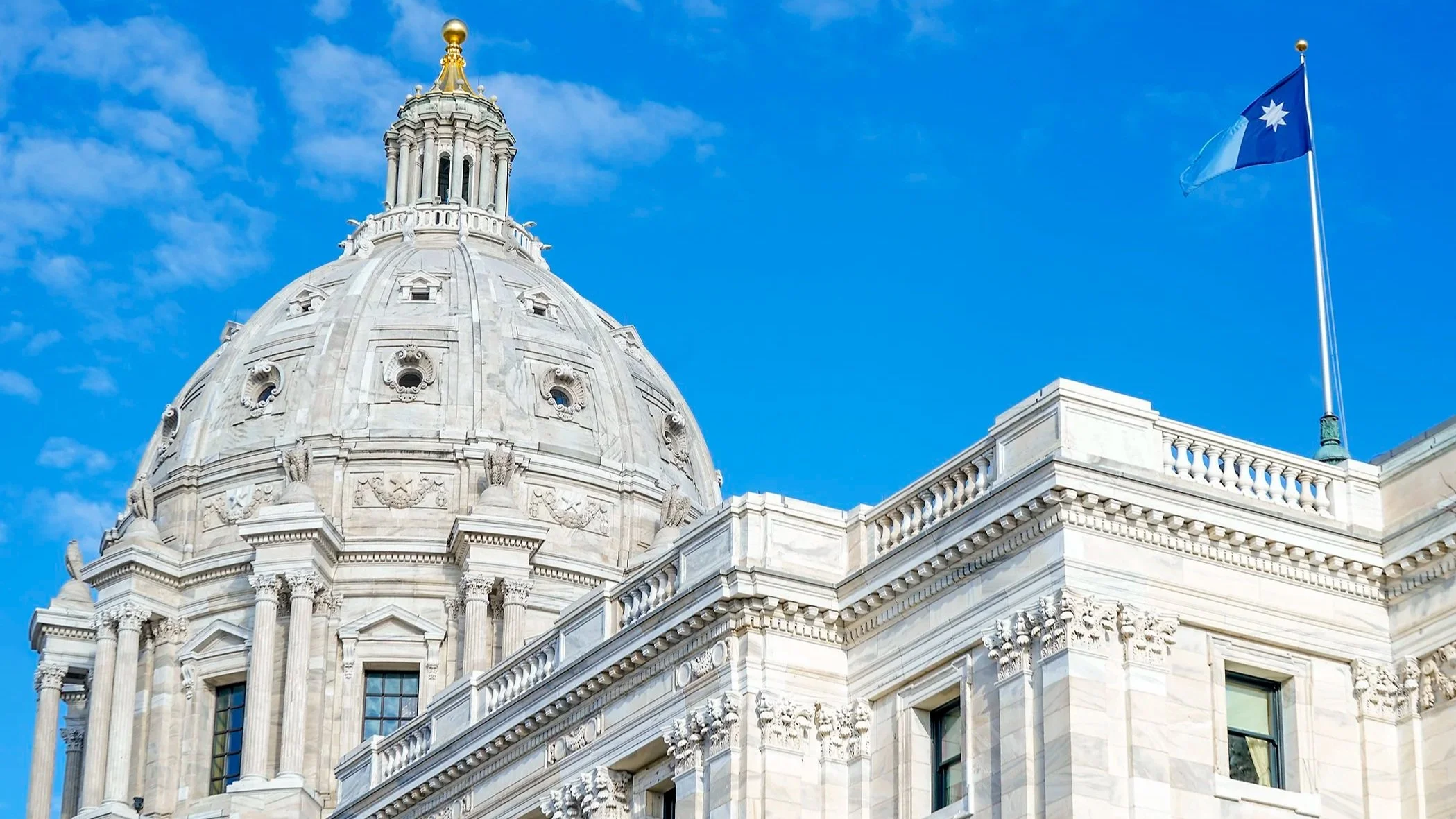
MN House News File Photo
Legislative environment
Politics Friday: High tensions at the Capitol as lawmakers tick down the to-do list (MPR News)
In heavily partisan Minnesota Legislature, some issues nudged along by cross-party cooperation (MPR News)
Deadlocked House rules panel rejects impeachment resolution against Walz, Ellison (MN House News)
Elections
House passes elections bill after lengthy amendments discussions (MN House News)
Data Centers
Federal Impacts
Minnesota up against the clock on Medicaid changes (MPR News)
Lawmakers advance legislation to stabilize local radio stations jeopardized by federal cuts (MN House News)
State Budget/Bonding
Housing
Minnesota Legislature passes massive cash infusion for rental, mortgage assistance (Minnesota Reformer)
What did not Pass + More Coverage
Media groups hope Minnesota will join other states in bolstering newsrooms (MinnPost)
A mega-bill to rein in ICE in Minnesota heads to the Senate floor (MinnPost) - The House did not vote on this bill.
Months after Annunciation shooting, Minnesota lawmakers are not close on school safety legislation (MinnPost)
Regulators, legislators take up energy assistance as need rises (Minnesota Reformer)